Start of content
Skip to main content

Learn with Us

At the Evidence Resource Center, we aim to help Pennsylvania’s school communities thoughtfully apply high-quality, relevant research to their own settings. Explore these topics to brush up on research basics, ESSA tiers, and the fundamentals of evidence-based decision making.

Evidence-Based Decision Making

It's exciting to find a strategy that targets your school’s needs, and has a track record of improving outcomes. What steps can you take to confirm the strategy is a good fit and prepare for high-quality implementation?

Stay true to your needs

Quality school improvement work begins with a needs assessment. This is the step where schools gather information, analyze their data, and dig deep to identify the root causes of their biggest challenges. This work is essential to ensure you invest your time and resources in strategies that target the right outcomes and are a good fit for your school. Evidence-based decisions use two types of evidence: rigorous research of effectiveness, and evidence that you gather about the needs and opportunities at your school.

If you haven't done this yet, or if it's been awhile since you examined your focus group notes, stakeholder surveys, data collection tools, and other artifacts from your needs assessment, take another look before you commit to a strategy.

Consider:

  • Does this strategy address root causes we identified? Which outcomes will still need to be addressed?
  • Do our targeted student groups match the population and setting where the evidence for this strategy was gathered? If not, will we need to adapt the strategy to our context?
  • Are there any aspects of implementation that will need extra support or attention, given the needs that we identified in our school community?

Verify the Tier

Remember, you must take the final step to confirm the ESSA Tier...

  • Tier 1: Your setting and population must be similar.
  • Tier 2: Your setting or population must be similar.
  • Tier 3: No requirements for similarity, but consider what adaptations must be made to account for your local context.
  • Tier 4: What is your plan to study your data as you implement this intervention? For help with this, see our Tier 4 materials.

Seek collaborative input

Your decision will benefit from the insight of important stakeholders. The Education Development Center recommends convening a Selection Committee, with representatives from key groups (e.g., teachers, parents, students, principals, and school staff) who "can help judge how successful or accepted an intervention may be with the intended population, and can help to secure buy-in from the groups they represent" (EDC, 2013). In Pennsylvania, a School Improvement Facilitator or the team you've assembled to steer your improvement efforts can serve as a terrific advisory group for this process.

  • The developer/publisher of the strategy, who may have insights into effective implementation or training resources you can use;
  • Other schools who have used the strategy; contact information can usually be located by reaching out to the publisher/developer.

Give the conversation structure

Your decision-making process will benefit from specific, defined consideration of the facets that mean the most. Go beyond the quick "What do you think of this?" email and follow an intentional decision-making guide, such as:

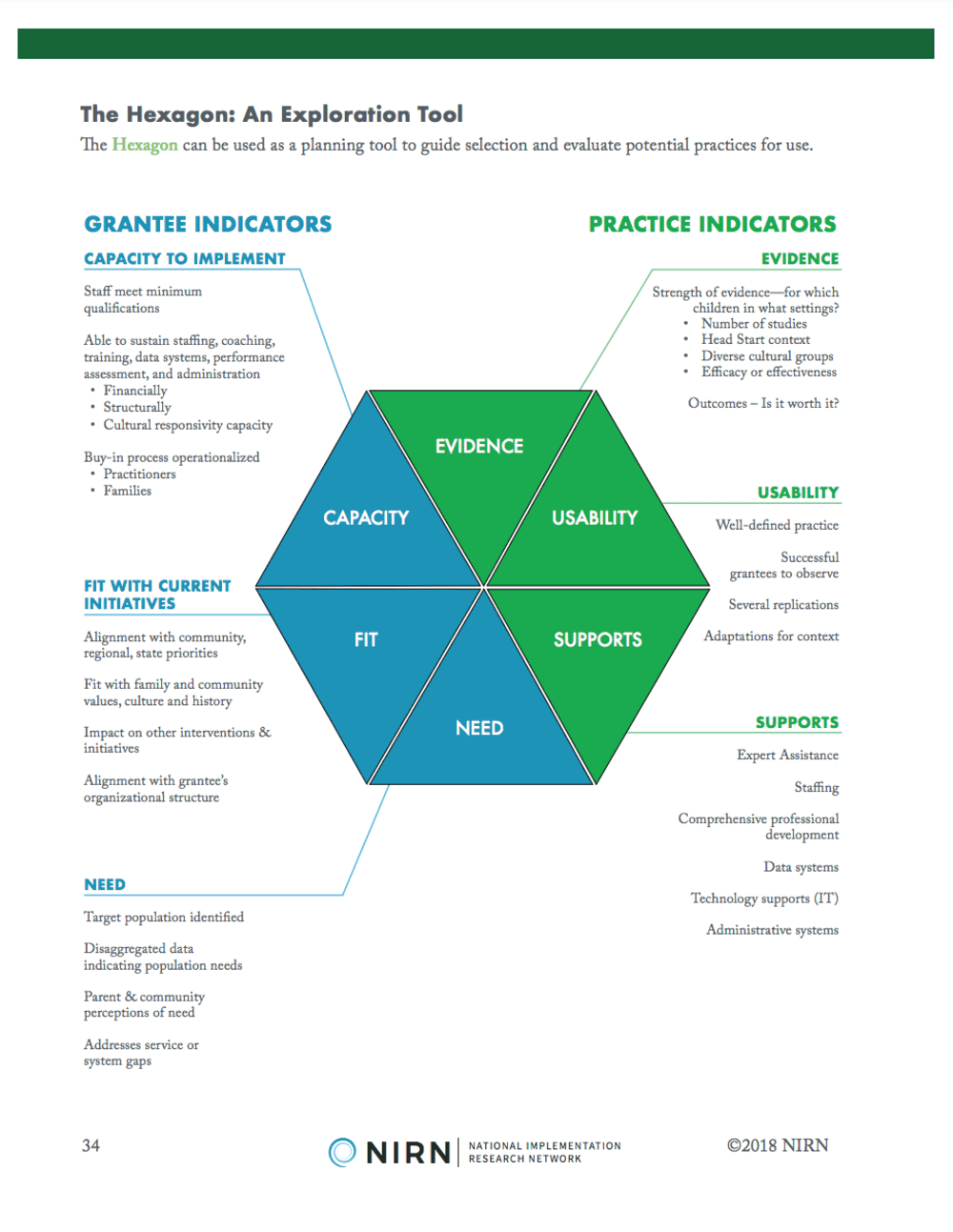
The Hexagon: An Exploration Tool Document Image

The Hexagon Tool

Covering six key facets of implementation, the Hexagon Tool was developed by the National Implementation Research Network (NIRN), Frank Porter Graham Child Development Institute, University of North Carolina at Chapel Hill, and based on the work of Kiser, Zabel, Zachik, & Smith (2007) and Blase, Kiser & Van Dyke (2013). It facilitates structured consideration of an educational strategy, including school-specific and strategy-specific considerations to determine fit and feasibility.
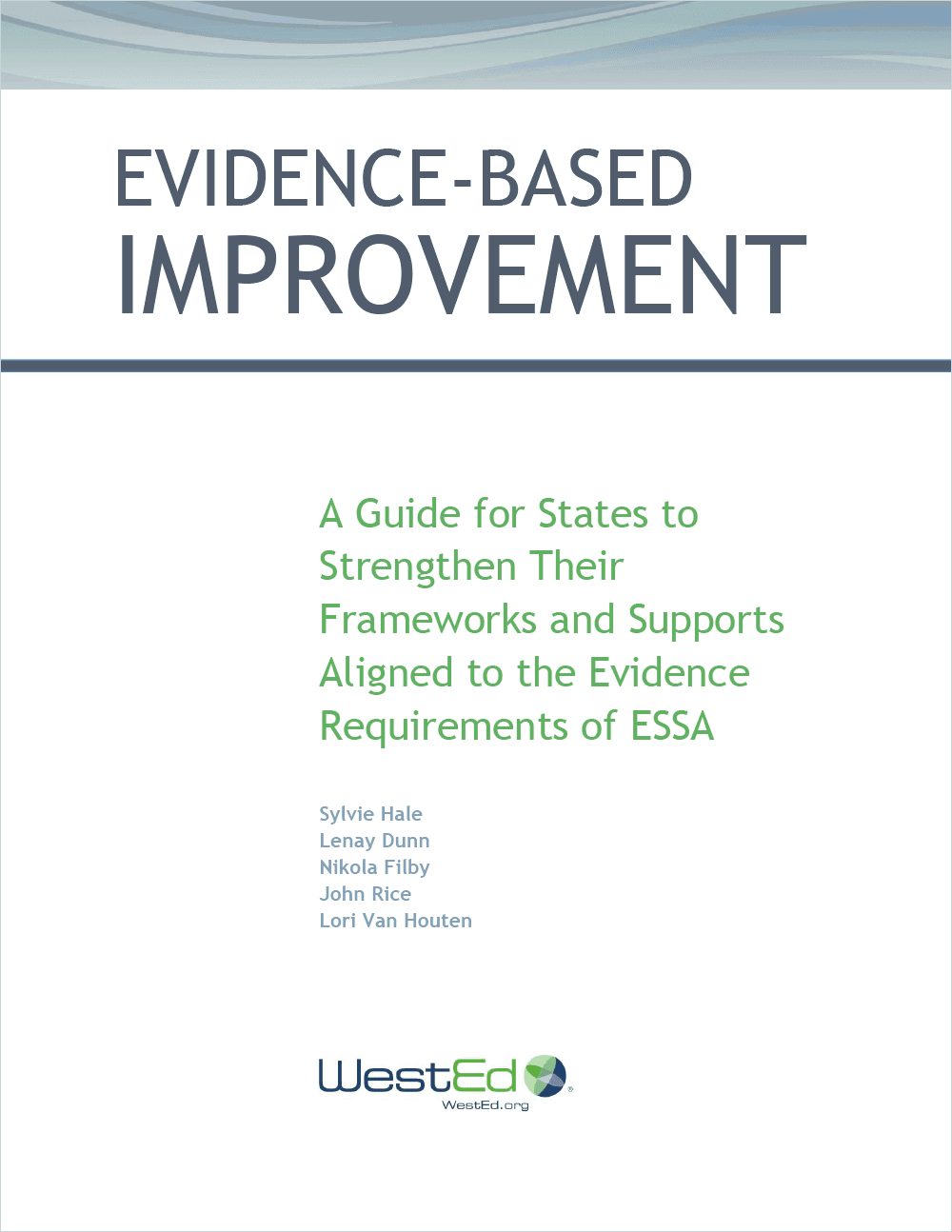
WestEd's Evidence Review Tools document image

WestEd's Evidence Review Tools

As part of a larger toolkit, WestEd provides two fillable Word documents that serve as workbooks for the strategy selection process:

An Intervention Evidence Review guides the review and comparison of all evidence available for an intervention, from the gathering evidence phase to assessing the cumulative body of evidence.

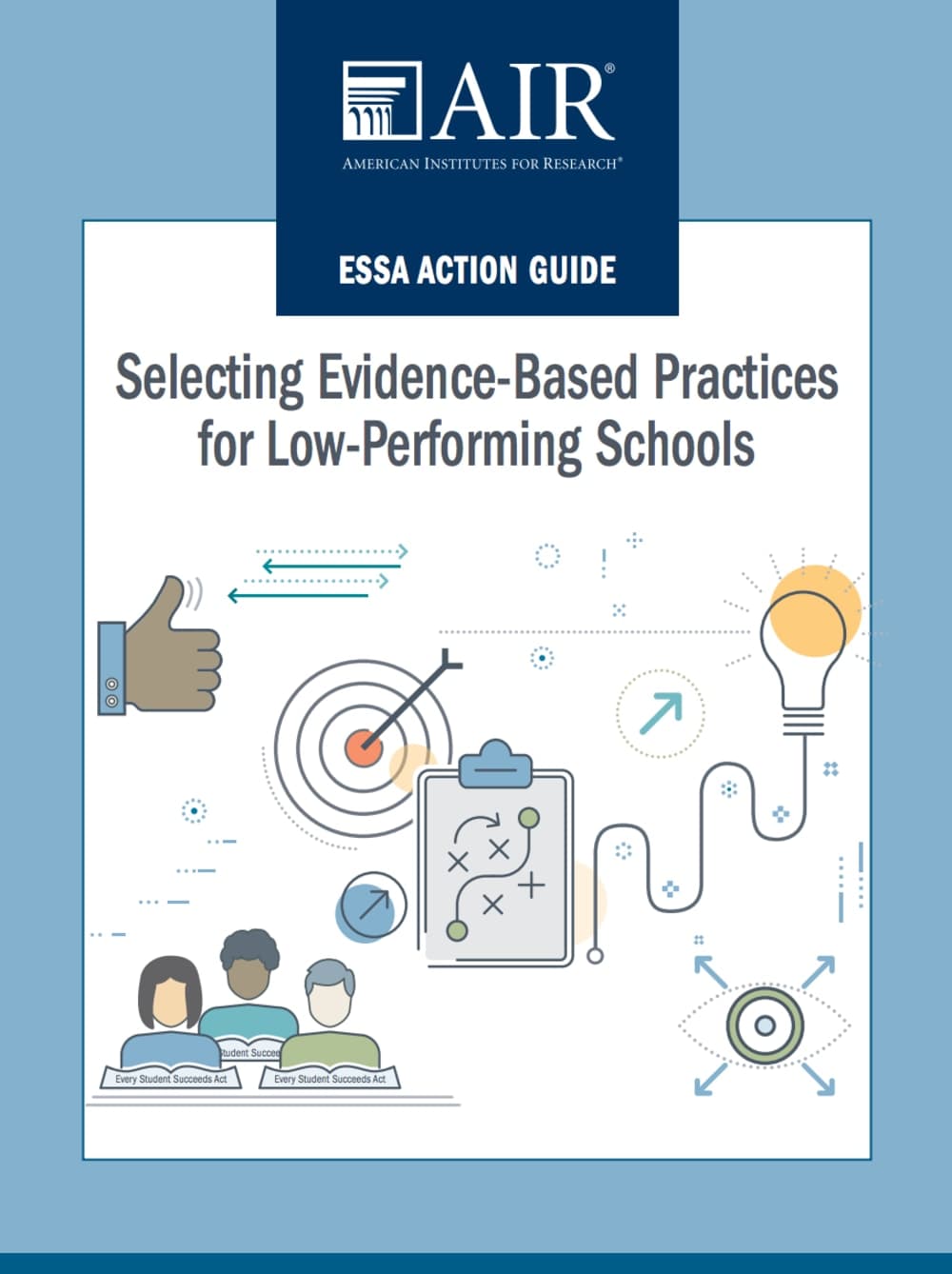
AIR’s Action Guide: Selecting EBPs for Low-Performing Schools document image

AIR’s Action Guide: Selecting EBPs for Low-Performing Schools

This document offers education leaders three action steps to ensure the evidence-based practices they select meet ESSA requirements and fit their specific needs.

Consider readiness to implement

Teachers who understand the value or effectiveness of a program are more likely to implement it wholeheartedly.

(Barr, Tubman, Montgomery, & Soza-Vento, 2002)

Though every educational strategy will require unique resources, investments, and skills, there's one thing that all strategies require for success: a unified attitude toward improvement. Weiner (2009) describes this as a motivational readiness that occurs when an individual recognizes that a situation requires change and he or she makes those changes a priority. High motivational readiness is marked by your school community's recognition that there is a problem (Weiner, 2009), and their desire to work as a team to solve it. Low motivational readiness may present as disagreement or denial that a problem exists, or that finding a solution is urgent.

In your leadership role, you can promote motivational readiness around your school's challenges starting in the needs assessment phase, with a solid understanding of your challenges and a strong belief in your shared goals. You can also promote a culture of evidence that gets teams excited about well-researched solutions and measurable outcomes. This early buy-in will fuel the selection of evidence-based strategies, the implementation of strategies with fidelity, diligent tracking of measurable data, and your team's ability to adjust course with flexibility and optimism.

The resources below can be helpful in making the case for evidence-based decision making, and planning actions and communications that can increase motivational readiness in your school community:

References:

Education Development Center (2013). A Framework for Effectively Implementing Evidence-Based Programs and Practices (EBPs). http://www.promoteprevent.org/.

Hale, S., Dunn, L., Filby, N, Rice, J., & Van Houten, L. (2017). Evidence-based improvement: A guide for states to strengthen their frameworks and supports aligned to the evidence requirements of ESSA. San Francisco: WestEd. https://www.wested.org/resources/evidence-based-improvement-essa-guide-for-states.

Metz, A. & Louison, L. (2018). The Hexagon Tool: Exploring Context. Chapel Hill, NC: National Implementation Research Network, Frank Porter Graham Child Development Institute, University of North Carolina at Chapel Hill. Based on Kiser, Zabel, Zachik, & Smith (2007) and Blase, Kiser & Van Dyke (2013). https://nirn.fpg.unc.edu/resources/hexagon-exploration-tool.

Weiner, B. J. (2009). A theory of organizational readiness for change. Implementation Science, 4, 1-9.